
Is My Child Struggling Because of French Immersion — Or Something More?
Understanding Reading Difficulties and Dyslexia in Bilingual Programs
If your child is in French immersion and struggling with reading, you have probably asked yourself: Is this just because they are learning in a second language? Should I wait and see?
It is a completely understandable question, and one that many parents and teachers grapple with. The short answer is: language of instruction can explain some reading lag in the early grades, but it cannot explain everything. Knowing the difference matters, because early support makes a real difference for kids who need it.
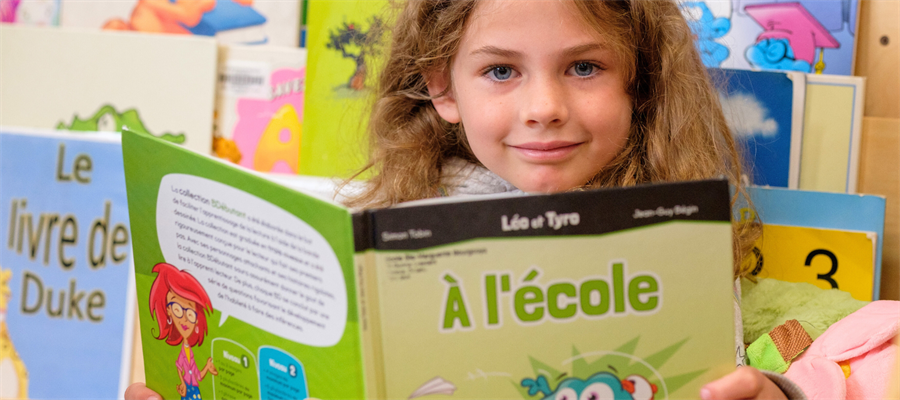
The Expected Adjustment: What Is Normal in French Immersion?
Research on French immersion programs — much of it conducted right here in Canada — tells us that a temporary lag in English reading skills in Grades 1 and 2 is common and expected. Children in immersion programs are spending the bulk of their school day learning to read and write in French. They simply have not had as much formal English literacy instruction as their peers in English-only classrooms.
The reassuring news is that for most children, this gap closes on its own by around Grades 3 or 4, without any special intervention. By the end of elementary school, many immersion students are meeting or even exceeding English reading benchmarks while also developing strong French literacy skills.
So a reading lag alone, in a Grade 1 or 2 immersion student, is usually something to monitor rather than panic about.
When the Lag Is More Than Just Language
Here is where things get more nuanced, and where many families miss an important window.
Reading is built on a foundational skill called phonological awareness — the ability to hear and manipulate the sounds in spoken language. Think of skills like:
Recognizing that "cat" and "hat" rhyme
Breaking the word "sunset" into two parts: "sun" and "set"
Identifying the first sound in the word "fish"
Blending the sounds /d/ /o/ /g/ together to make "dog"
Here is the key thing to understand: phonological awareness is not a French skill or an English skill. It is a language-neutral, foundational processing ability. A child who struggles with phonological awareness will show that difficulty in both languages, not just the one they are being taught in.
This means that if your child is showing weaknesses in phonological awareness alongside their reading difficulties, the French immersion program is unlikely to be the root cause. Instead, it may point to an underlying reading disorder such as dyslexia.
What Is Phonological Dyslexia?
Dyslexia is the most common learning disability, affecting an estimated 15 to 20 percent of the population. Despite common misconceptions, dyslexia is not about seeing letters backwards or a problem with vision. It is a neurological difference in how the brain processes the sounds of language, which then makes it harder to connect those sounds to written letters and words.
Children with a phonological dyslexia profile typically show:
Significant difficulty decoding new or unfamiliar words
Struggles identifying the position of sounds within words (beginning, middle, end)
Challenges with spelling, even common words
A stronger sight word bank relative to their actual decoding ability, because they have memorized whole words rather than sounding them out
These challenges show up regardless of what language the child is learning in.
The Hidden Risk in French Immersion: Delayed Identification
One concern that researchers and psychologists have raised specifically about French immersion is that the program can inadvertently delay the identification of dyslexia. When a child struggles with reading, the natural assumption is that the second language environment is to blame. Parents and teachers may be told to wait and see whether the child catches up, and months or years pass before a proper assessment takes place.
For children with dyslexia, this waiting period is costly. Research is consistent that early, intensive intervention produces the strongest outcomes. The brain is most responsive to literacy intervention in the early grades. Waiting until Grade 4 to seek support, when a child might have been identified in Grade 1 or 2, means missing some of the most valuable time.
If your child is in an immersion program and showing both reading difficulties and phonological awareness weaknesses, it is worth pursuing an assessment sooner rather than later, rather than assuming the program explains everything.
What Does Effective Intervention Look Like?
If your child is identified with a phonological dyslexia profile, the most important thing to know is that dyslexia responds to the right kind of teaching. The brain can build new pathways for reading with explicit, structured, and systematic instruction.
The research-supported approach is called Structured Literacy. This is not a single program but a set of principles: instruction that is explicit, systematic, cumulative, and that directly teaches phonemic awareness, letter-sound relationships, decoding, spelling, and fluency. Programs like Orton-Gillingham and Barton are well-known examples.
What About French and English? Does Learning in One Language Help the Other?
This is one of the most common questions families ask, and the research gives an important nuance here.
For children without reading difficulties, literacy skills do transfer reasonably well between languages. A child who learns to read well in French will bring many of those skills to English reading, and vice versa.
For children with dyslexia, however, this transfer is less reliable. Because dyslexia affects the very phonological processing abilities through which that transfer happens, skills gained in one language do not automatically carry over to the other in the same way. This means that ideally, your child would receive Structured Literacy intervention in both French and English over time, rather than assuming that one will take care of the other.
In practice, qualified French-language Structured Literacy practitioners can be harder to find. If English-based intervention is what is available, it is still worthwhile and should not be delayed. A good practitioner will help bridge what your child is learning in English back to French sounds and spelling patterns, maximizing the benefit across both languages.
One particularly valuable starting point is phonemic awareness work at the oral level, before or alongside print-based reading instruction. Because this type of work targets sounds in spoken language rather than written text, it sits close to the language-neutral level and can support literacy development in both French and English simultaneously.
Should My Child Stay in French Immersion?
This is a deeply personal decision and one that depends on many factors, including your child's overall wellbeing, the availability of support within the program, and how they are responding to intervention.
Research does suggest that with appropriate, evidence-based support, many children with dyslexia can remain in and succeed in French immersion. It is not an automatic reason to leave the program. However, this should be an ongoing conversation between your family, your child's school, and any professionals supporting your child, revisited as you learn more about how they are responding to intervention.
When to Seek an Assessment
Consider reaching out for a psychoeducational assessment if your child:
Is in Grade 1 or 2 and showing persistent difficulty with phonological awareness tasks in either language
Struggles significantly with learning letter-sound relationships or blending sounds
Has difficulty identifying sounds at the beginning, middle, or end of words
Shows reading and spelling errors that go beyond what would be expected for their stage of language learning
Has a family history of reading or spelling difficulties, as dyslexia does run in families
Early identification means early support, and early support means better outcomes. You do not need to wait until your child is visibly falling behind to ask for help.
Chickadee Psychology provides psychoeducational assessments for children and youth in Alberta. If you have questions about your child's reading development or would like to explore whether an assessment is right for your family, we would be happy to connect.
